
Balance Testing: Measuring the Brain’s Ability to Stay Upright
Balance Is a Brain Function, Not Just a Muscle Function

By Dr. David Traster, DC, MS, DACNB
Co-owner, The Neurologic Wellness Institute
Boca Raton • Chicago • Waukesha • Wood Dale
www.neurologicwellnessinstitute.com
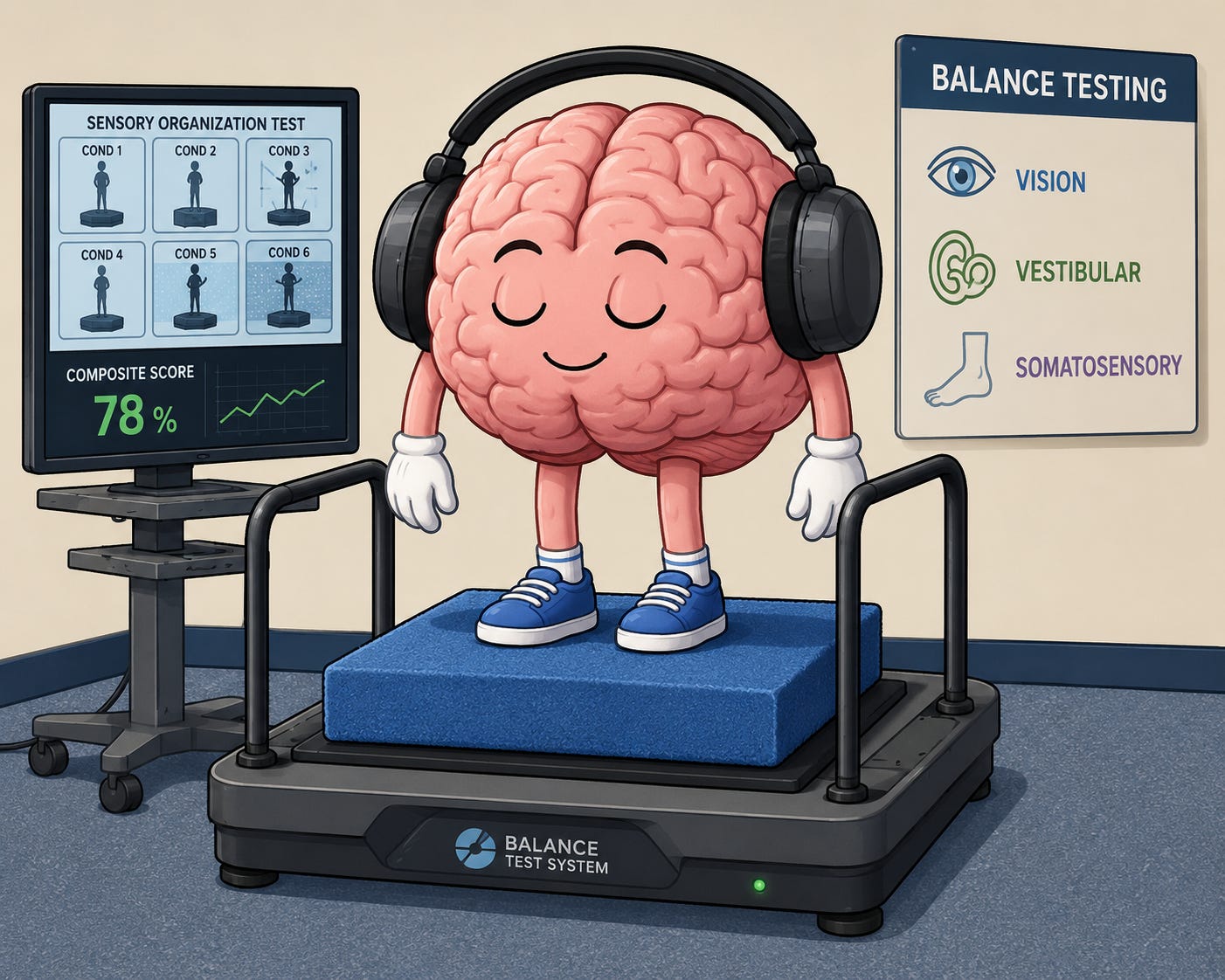
When most people think about balance, they imagine strong legs, a healthy inner ear, or good coordination. While these certainly contribute, balance is fundamentally a neurological process. Every moment we stand upright, the brain is continuously receiving millions of pieces of sensory information from the vestibular system, vision, proprioception, pressure receptors in the feet, joints, muscles, and even internal organs. The nervous system must rapidly determine which sensory information is accurate, which information should be ignored, and how to generate an appropriate motor response to maintain stability.
Balance testing therefore provides an objective window into how efficiently the nervous system integrates sensory information. Rather than simply determining whether someone can stand on one foot, modern computerized testing allows clinicians to quantify the strategies the brain uses to remain upright, identify sensory integration errors, monitor rehabilitation progress, and even predict fall risk.
For patients with dizziness, concussion, Parkinson’s disease, stroke, cerebellar disorders, dysautonomia, vestibular dysfunction, neuropathy, multiple sclerosis, aging-related balance decline, or unexplained falls, balance testing often reveals neurological deficits that cannot be appreciated during a routine physical examination.