
Cyclic Vomiting Syndrome: Understanding the Brain, Autonomic Nervous System, and the Biology Behind Recurrent Vomiting
When Vomiting Is More Than a Stomach Problem

By Dr. David Traster, DC, MS, DACNB
Co-owner, The Neurologic Wellness Institute
Boca Raton • Chicago • Waukesha • Wood Dale
www.neurologicwellnessinstitute.com
Few conditions are as frightening and disruptive as cyclic vomiting syndrome (CVS). Patients often experience sudden episodes of relentless nausea and vomiting that can last for hours or even days, only to recover completely between attacks. Many individuals visit emergency departments repeatedly, undergo numerous gastrointestinal tests, and are told that “everything looks normal.” Yet the symptoms are very real, often severe enough to require hospitalization for dehydration.
For decades, cyclic vomiting syndrome was viewed primarily as a gastrointestinal disorder. Today, research increasingly supports a far more complex picture. CVS appears to be a disorder involving the brain, autonomic nervous system, neuroendocrine system, mitochondria, and gut-brain communication. It shares remarkable similarities with migraine, dysautonomia, vestibular disorders, and disorders of central sensory processing. Understanding these relationships opens entirely new possibilities for diagnosis and treatment.
What Is Cyclic Vomiting Syndrome?
Cyclic vomiting syndrome is characterized by recurrent, stereotyped episodes of severe nausea and vomiting separated by symptom-free intervals. Episodes often begin suddenly, progress rapidly, and eventually resolve completely before the next attack occurs.
Diagnostic criteria generally include repeated episodes of intense vomiting lasting hours to several days with relatively normal health between attacks and no structural gastrointestinal explanation.
The attacks often follow a predictable pattern. Many patients can identify the time of day, duration, and even specific triggers that precede an episode.
How Common Is It?
Although once believed to occur primarily in children, cyclic vomiting syndrome is increasingly recognized in adults. Many adult patients go years before receiving the correct diagnosis.
The disorder affects both sexes but appears slightly more common in females during adulthood. Numerous patients have either a personal or family history of migraine headaches, suggesting a shared neurological mechanism.
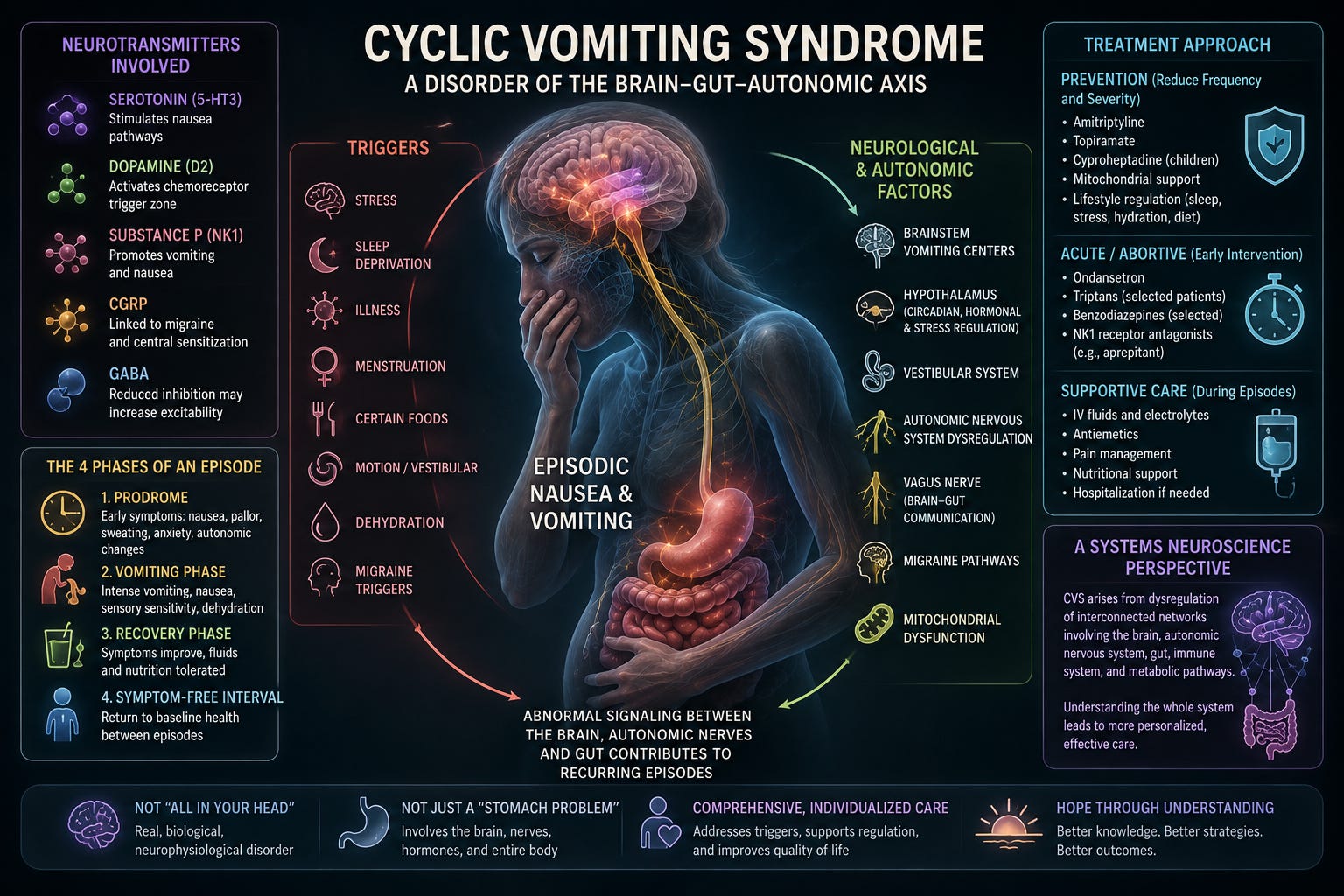
The Four Phases of an Episode
Most patients experience four distinct stages.
The Prodrome
Patients begin feeling “something is wrong.” They may develop anxiety, pallor, sweating, dizziness, abdominal discomfort, sensitivity to light or sound, or intense nausea.
Some individuals experience autonomic symptoms including:
Rapid heart rate
Cold hands and feet
Trembling
Excessive sweating
Blood pressure fluctuations
Dizziness upon standing
This phase often resembles the aura experienced before migraines.
The Vomiting Phase
This is the most severe stage.
Patients may vomit dozens of times per hour while becoming progressively dehydrated. They often cannot tolerate food, fluids, medications, or even movement.
Many patients seek dark, quiet rooms because sensory stimulation worsens symptoms.
Recovery
Vomiting gradually slows, nausea improves, and patients begin tolerating fluids before progressing to normal meals.
Symptom-Free Interval
Between episodes, many patients feel completely normal, although some continue to experience fatigue, dysautonomia, migraine symptoms, motion sensitivity, or vestibular dysfunction.
Why Does the Brain Trigger Vomiting?
Vomiting is one of the brain’s most primitive survival reflexes.
Multiple brain regions participate in generating vomiting:
Area postrema
Nucleus tractus solitarius (NTS)
Dorsal motor nucleus of the vagus
Parabrachial nucleus
Hypothalamus
Amygdala
Insular cortex
Anterior cingulate cortex
Vestibular nuclei
Cerebellum
These structures continuously integrate information from:
The gastrointestinal tract
Blood chemistry
Vestibular system
Emotional centers
Pain pathways
Hormonal signals
Autonomic nervous system
When enough excitatory input accumulates, the brain activates the vomiting program.
In cyclic vomiting syndrome, this threshold appears abnormally low.
The Migraine Connection
Perhaps the strongest neurological association is migraine disease.
Many patients with cyclic vomiting syndrome either have migraines or eventually develop them.
The overlap includes:
Similar triggers
Similar brainstem activation
Similar sensory hypersensitivity
Shared neurotransmitters
Similar genetic predisposition
Response to migraine medications
Many experts now consider cyclic vomiting syndrome to represent a migraine variant affecting autonomic and gastrointestinal pathways rather than producing headache.
The Role of the Hypothalamus
The hypothalamus acts as one of the body’s master control centers.
It regulates:
Sleep
Circadian rhythms
Stress responses
Hormones
Temperature
Hunger
Autonomic function
Many cyclic vomiting episodes begin during early morning hours when hypothalamic hormonal output changes dramatically.
Stress, sleep deprivation, illness, fasting, and hormonal fluctuations all strongly influence hypothalamic function and commonly trigger attacks.
Dysautonomia and the Autonomic Nervous System
One of the most fascinating aspects of cyclic vomiting syndrome is its association with autonomic dysfunction.
Numerous patients demonstrate abnormalities in autonomic testing including:
Orthostatic intolerance
POTS
Reduced heart rate variability
Abnormal sympathetic activation
Parasympathetic dysregulation
Abnormal sudomotor function
The autonomic nervous system continuously regulates:
Gastric emptying
Intestinal motility
Blood flow
Blood pressure
Heart rate
Sweating
Stress responses
If autonomic regulation becomes unstable, the gastrointestinal tract may receive conflicting neural signals that contribute to nausea and vomiting.
The Vagus Nerve
The vagus nerve serves as the primary communication pathway between the brain and gastrointestinal tract.
Approximately 80% of vagal fibers carry sensory information from the gut to the brain.
Excessive activation of vagal afferents can stimulate the nucleus tractus solitarius and nearby vomiting centers.
At the same time, abnormal vagal motor output may impair gastric emptying and alter digestive function.
This creates a vicious cycle in which nausea further stimulates vagal pathways, amplifying symptoms.
The Vestibular System
Many patients with cyclic vomiting syndrome report:
Motion sickness
Dizziness
Visual sensitivity
Balance problems
Migraine
PPPD-like symptoms
The vestibular nuclei project directly into the nucleus tractus solitarius and parabrachial nucleus, allowing abnormal vestibular input to influence nausea and vomiting.
This overlap helps explain why vestibular migraine and cyclic vomiting syndrome frequently coexist.
Neurotransmitters Involved
Numerous neurotransmitter systems contribute to cyclic vomiting syndrome.
Serotonin
Serotonin plays a major role in nausea generation.
5-HT3 receptors within the gut and brainstem activate vomiting pathways.
This explains why ondansetron can reduce symptoms in some patients.
Dopamine
Dopamine stimulates the chemoreceptor trigger zone within the area postrema.
Blocking dopamine receptors with medications such as prochlorperazine or metoclopramide may reduce vomiting.
Substance P
Substance P activates NK1 receptors involved in persistent nausea and vomiting.
Newer NK1 antagonists have shown promise in difficult cases.
CGRP
Calcitonin gene-related peptide (CGRP), a key mediator in migraine, may contribute to CVS by increasing central sensory excitability, neurogenic inflammation, and brainstem activation. This overlap has led to interest in migraine therapies that target the CGRP pathway, although evidence in CVS is still emerging.
GABA
Reduced inhibitory GABA signaling may allow excessive activation of brainstem vomiting circuits.
Mitochondrial Dysfunction
Growing evidence suggests mitochondrial dysfunction contributes to cyclic vomiting syndrome.
Neurons require enormous amounts of ATP to maintain membrane potentials and synaptic communication.
When mitochondrial energy production becomes impaired, neurons become metabolically fragile and more susceptible to excessive firing.
Several mitochondrial DNA polymorphisms have been associated with CVS.
Some clinicians therefore recommend mitochondrial support with nutrients such as:
Coenzyme Q10
Riboflavin
L-carnitine
Although evidence varies in quality, these supplements are commonly incorporated into treatment plans, particularly when migraine or suspected mitochondrial dysfunction is present.
The HPA Axis and Stress Biology
Psychological stress does not “cause” cyclic vomiting syndrome, but it can activate physiological pathways capable of triggering episodes.
Stress activates:
Hypothalamus
Pituitary
Adrenal glands
Sympathetic nervous system
Cortisol release
Catecholamine release
This stress response increases excitability throughout the autonomic network and may lower the threshold for vomiting.
Understanding this distinction is important. Stress acts as a physiological trigger rather than implying the disorder is imaginary or purely psychological.
Why Sleep Matters
Sleep deprivation is among the most common triggers reported by patients.
Sleep regulates:
Hypothalamic function
Glymphatic clearance
Neurotransmitter balance
Mitochondrial recovery
Autonomic tone
Even one night of poor sleep may significantly lower the threshold for an attack in susceptible individuals.
Common Triggers
Although triggers vary considerably, commonly reported factors include:
Emotional stress
Sleep deprivation
Viral illness
Menstruation
Physical exhaustion
Fasting
Certain foods
Alcohol
Motion sickness
Migraine triggers
Heat exposure
Some individuals experience episodes with remarkable regularity, suggesting an underlying circadian component.
Current Medical Treatments
Treatment generally focuses on three goals: preventing episodes, aborting attacks early, and providing supportive care during active vomiting.
Preventive medications may include tricyclic antidepressants, particularly amitriptyline, which has the strongest evidence in adults. Other options include topiramate, propranolol in selected patients, cyproheptadine (especially in children), and selected anticonvulsants or migraine-preventive therapies based on the patient’s clinical profile.
During the prodromal phase, early intervention may shorten or prevent an episode. Depending on the individual, clinicians may use ondansetron, migraine medications such as triptans in appropriate patients, anxiolytics like lorazepam for carefully selected cases, or NK1 receptor antagonists such as aprepitant.
During severe attacks, treatment often includes intravenous fluids with electrolyte replacement, antiemetics, pain management when necessary, correction of metabolic abnormalities, nutritional support, and hospitalization if dehydration or complications develop.
Looking Beyond the Gastrointestinal Tract
As our understanding evolves, cyclic vomiting syndrome increasingly appears to be a disorder of network dysfunction rather than a disease confined to the stomach. The gastrointestinal tract is the organ that expresses the symptoms, but the underlying disturbance may involve the brainstem, hypothalamus, autonomic nervous system, vestibular system, mitochondrial metabolism, and the intricate communication between the brain and the gut.
This broader perspective also raises the possibility that treatment should extend beyond simply suppressing nausea. In carefully selected patients, comprehensive management may include optimizing sleep, treating coexisting migraine or dysautonomia, improving autonomic regulation, addressing vestibular dysfunction when present, supporting mitochondrial health, managing stress physiology, and correcting nutritional deficiencies. These approaches should be individualized and guided by the patient’s clinical findings rather than applied universally.
A Systems Neuroscience Perspective
Cyclic vomiting syndrome reminds us that symptoms often emerge from interconnected physiological networks rather than isolated organs. The same neural circuits that regulate autonomic function, balance, emotional processing, metabolism, circadian rhythms, and migraine biology also influence the brain’s vomiting centers. When these systems become unstable, recurrent episodes of severe nausea and vomiting may result.
Viewing CVS through the lens of systems neuroscience encourages clinicians to look beyond the gastrointestinal tract and evaluate the broader neurological and autonomic context. For many patients, this integrated perspective may lead to a more complete understanding of why episodes occur, more personalized treatment strategies, and improved long-term management rather than simply treating each attack as an isolated gastrointestinal event.
REFERENCES:
Venkatesan, T., Levinthal, D. J., Tarbell, S. E., Jaradeh, S. S., Hasler, W. L., Issenman, R. M., Adams, K. A., Sarosiek, I., Stave, C. D., Sharaf, R. N., Sultan, S., & Li, B. U. K. (2019). Guidelines on management of cyclic vomiting syndrome in adults by the American Neurogastroenterology and Motility Society and the Cyclic Vomiting Syndrome Association. Neurogastroenterology & Motility, 31(Suppl. 2), e13604.
Levinthal, D. J., Staller, K., & Venkatesan, T. (2024). Diagnosis and management of cyclic vomiting syndrome. Gastroenterology, 167(2), 408–420.
Abell, T. L., Adams, K. A., Boles, R. G., Bousvaros, A., Chong, S. K., Fleisher, D. R., Hasler, W. L., Li, B. U. K., Lomas, A., Lustre, B. A., McCallum, R. W., Olden, K. W., Parkman, H. P., Parrish, C. R., Pasricha, P. J., Prakash, C., Rudolph, C. D., Tarbell, S. E., & Vakil, N. (2008). Cyclic vomiting syndrome in adults. Neurogastroenterology & Motility, 20(4), 269–284.
Kumar, N., Bashar, Q., Reddy, N., Sengupta, J., Ananthakrishnan, A., Schroeder, A., Venkatesan, T., & Malik, B. A. (2012). Cyclic vomiting syndrome (CVS): Is there a difference based on onset of symptoms—Pediatric versus adult? BMC Gastroenterology, 12, 52.
Li, B. U. K., & Fleisher, D. R. (1999). Cyclic vomiting syndrome: Features to be explained by a pathophysiologic model. Digestive Diseases and Sciences, 44(8 Suppl.), 13S–18S.
Even individuals with a medical background have limited exposure to functional disorders. Truly an insightful post.