
Genetic Polymorphisms, Methylation, and the Myth of the “Broken Gene”: Your Genes Are Not Your Destiny
Discussing MTHFR, COMT, CBS, MAOA, PEMT, BHMT, SHMT, MTR, MTRR, VDR, FUT2

By Dr. David Traster, DC, MS, DACNB
Co-owner, The Neurologic Wellness Institute
Boca Raton • Chicago • Waukesha • Wood Dale
www.neurologicwellnessinstitute.com
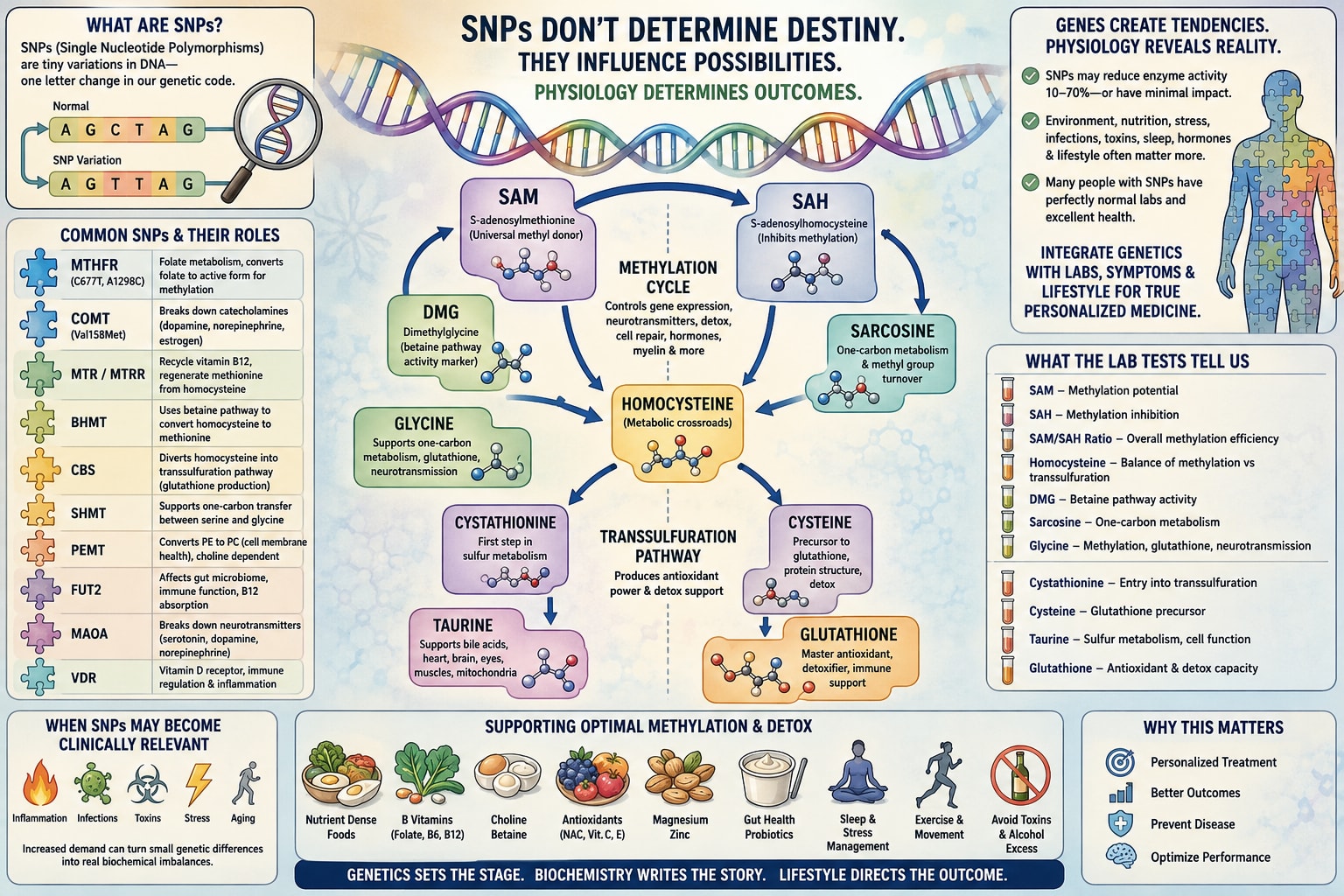
Over the past decade, genetic testing has become one of the most popular tools in functional medicine. Patients frequently arrive carrying reports filled with acronyms like MTHFR, COMT, CBS, MAOA, PEMT, BHMT, SHMT, MTR, MTRR, VDR, FUT2, and dozens of others. Many have been told that their genes explain every symptom they experience. Others have been told their genetics are completely irrelevant because genes never change. Like most things in biology, the truth lies somewhere in the middle.
Genes matter. They influence how enzymes function, how efficiently nutrients are utilized, how rapidly neurotransmitters are metabolized, how well the immune system responds to infections, and how toxins are processed. However, genes are only one variable within an incredibly dynamic biological system. Environmental exposures, nutrition, inflammation, infections, hormones, sleep, exercise, medications, gut health, aging, and even psychological stress often influence physiology far more than the genetic blueprint itself.
The greatest mistake modern medicine has made is assuming genes never matter. The greatest mistake functional medicine sometimes makes is assuming genes explain everything.
Both are wrong.