
The Brain Microbiome: The Next Frontier in Neuroscience?
From sterile organ to biological ecosystem: a paradigm shift in brain science

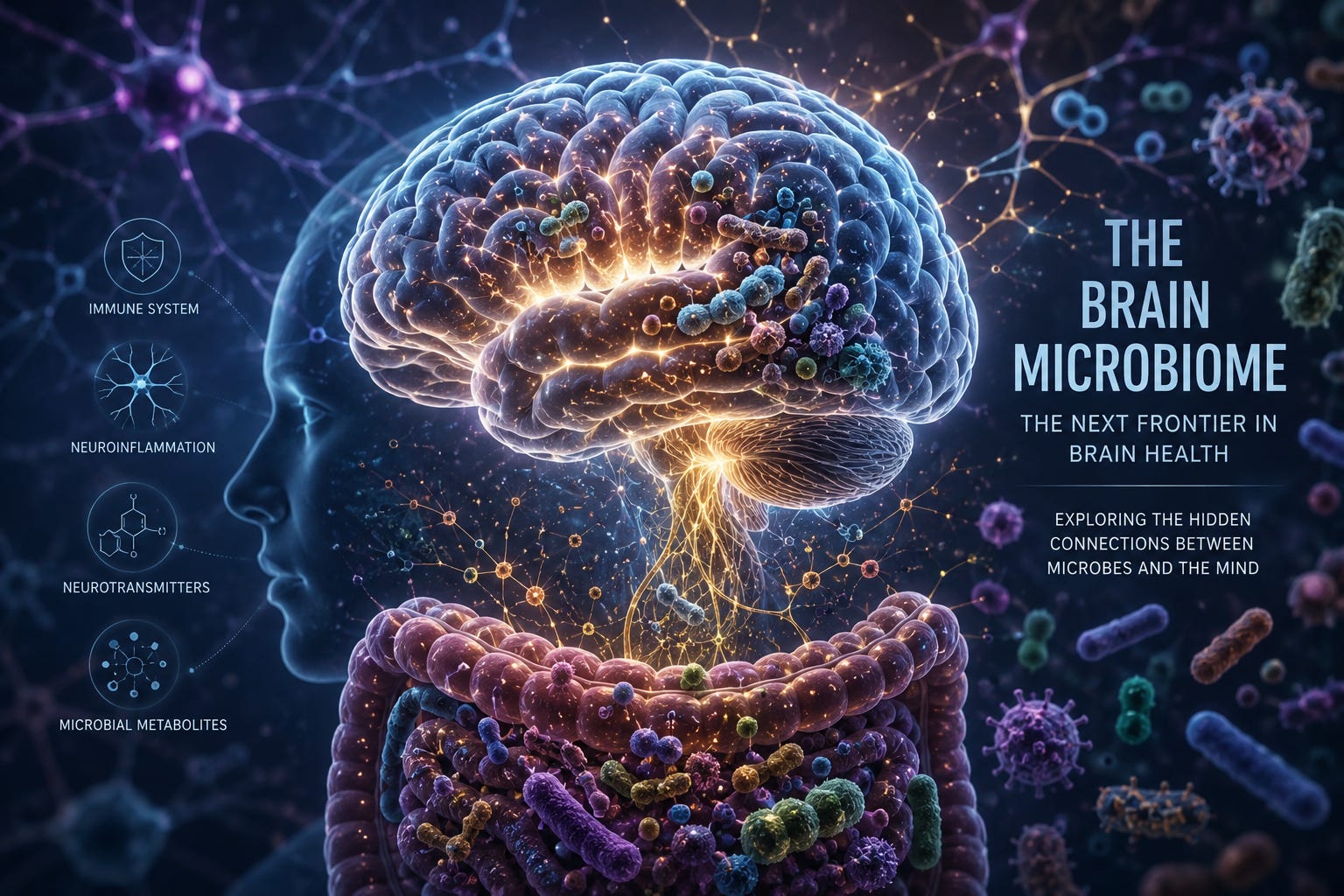
By Dr. David Traster, DC, MS, DACNB
Co-owner, The Neurologic Wellness Institute
Boca Raton • Chicago • Waukesha • Wood Dale
www.neurologicwellnessinstitute.com
For decades, neuroscience viewed the brain as a fortress. Protected by the blood-brain barrier, isolated from the outside world, and sterile under healthy conditions, the brain was believed to exist largely separate from the microbial ecosystems inhabiting the gut, skin, lungs, and mouth.
But over the last several years, a provocative question has emerged:
Could the brain itself contain microbes?
And if so, what would that mean for memory, cognition, inflammation, neurodegeneration, mood disorders, and the future of medicine?
The concept of a “brain microbiome” is one of the most debated and rapidly evolving topics in neuroscience today. Some researchers believe microbial signals — or even microbes themselves — may play important roles in brain aging and disease. Others argue the evidence is still limited and may reflect contamination, infection, or breakdown of protective barriers rather than a true resident ecosystem. The reality is that neuroscience is standing at the edge of a major scientific mystery.
What Is the Brain Microbiome?
The term “brain microbiome” refers to the hypothesis that bacteria, fungi, viruses, or microbial fragments may exist within the central nervous system in ways that influence brain function and health.
If true, this would represent a major shift in how we understand the brain.
Traditionally, the brain has been considered an immune-protected and sterile organ. The blood-brain barrier tightly regulates what enters the nervous system, preventing pathogens, toxins, and inflammatory molecules from freely accessing brain tissue.
Yet modern sequencing technologies have identified microbial DNA, RNA, and bacterial components in some human brain samples, including samples from individuals with neurodegenerative diseases such as Alzheimer’s.
Some studies have identified bacterial signatures commonly found in the oral cavity, particularly organisms associated with periodontal disease. Others have reported increased microbial signals in diseased brains compared to healthy controls.
But there is an important distinction.
Finding microbial fragments in the brain does not necessarily mean there is a stable, living microbiome residing there.
That distinction is central to the entire debate.
The Brain May Not Be Sterile — But That Does Not Mean It Has a Microbiome
This is where the science becomes nuanced.
Many researchers argue that current evidence does not support the existence of a true, stable microbial community in healthy brain tissue. They suggest that findings of bacterial DNA may reflect contamination during tissue analysis, leakage across a compromised blood-brain barrier, or the presence of microbes in diseased or aging brains rather than normal physiology.
Others propose that microbial presence in the brain may represent transient exposure rather than colonization.
In other words:
A diseased brain containing microbial material does not necessarily prove that healthy brains contain a functioning microbiome.
Still, the repeated observation of microbial signals in neurological disease has kept the hypothesis alive. Some scientists suspect that low-level microbial exposure may occur over time, especially as the blood-brain barrier becomes more permeable with aging, inflammation, trauma, or metabolic dysfunction.
The debate is no longer whether microbes influence the brain.
That is already well established.
The real question is whether microbes physically inhabit the brain in meaningful and consistent ways.
The Gut Microbiome and the Brain: What We Know for Certain
While the “brain microbiome” remains controversial, the gut-brain connection is no longer theoretical.
The gut microbiome unquestionably influences the nervous system.
Trillions of microorganisms in the gastrointestinal tract communicate with the brain through multiple pathways, including:
The vagus nerve
Immune signaling
Cytokines and inflammatory pathways
Short-chain fatty acids
Neurotransmitter production
Hormonal signaling
Tryptophan metabolism
Blood-brain barrier regulation
Microglial activation
Research shows that the gut microbiome influences stress responses, mood, cognition, sleep, neuroinflammation, neuroplasticity, and risk for neurodegenerative diseases.
Animal models have demonstrated that altering gut bacteria can change behavior, anxiety levels, social interactions, inflammation, and even motor function.
The gut microbiome has been linked to:
Alzheimer’s disease
Parkinson’s disease
Multiple sclerosis
Autism spectrum conditions
Depression
Anxiety
Chronic fatigue syndromes
Neuroinflammatory disorders
This bidirectional communication network is often referred to as the microbiota–gut–brain axis.
Similarities Between the Gut Microbiome and the Proposed Brain Microbiome
Both concepts center on the idea that microbes influence brain function.
Both involve interactions with:
The immune system
Neuroinflammation
Glial cells
Blood-brain barrier integrity
Neurotransmitters
Metabolism
Neural signaling
Both may contribute to neurodegenerative disease through chronic inflammation and altered immune responses.
In conditions like Alzheimer’s disease, some researchers hypothesize that microbial products may contribute to amyloid formation, microglial activation, and neuronal dysfunction.
There is also growing interest in the role of oral bacteria, particularly those associated with gum disease, in increasing systemic inflammation and potentially affecting brain health.
Differences Between the Gut Microbiome and the Proposed Brain Microbiome
The gut microbiome is an established, well-characterized biological system.
The brain microbiome remains a hypothesis.
The gut contains a dense and diverse microbial population. The brain, if it contains microbes at all, likely contains them in extremely small quantities.
The gut is designed for microbial interaction. The brain is designed for protection.
The intestinal barrier is selectively permeable. The blood-brain barrier is far more restrictive and tightly regulated.
In the gut, microbes form stable, self-sustaining communities. In the brain, there is currently no consistent evidence of stable microbial colonization in healthy individuals.
This distinction is critical.
The gut microbiome is a confirmed regulator of brain health.
The brain microbiome is still an open question.
How Could Microbes Influence the Brain?
Even without a resident brain microbiome, microbes can profoundly affect brain function.
Neuroinflammation
Microbial molecules can activate immune cells such as microglia and astrocytes, increasing inflammatory signaling in the brain.
Blood-Brain Barrier Dysfunction
Systemic inflammation, gut permeability, trauma, infection, and metabolic dysfunction can weaken the blood-brain barrier, allowing inflammatory molecules or microbial fragments to access neural tissue.
Neurotransmitter Modulation
Gut bacteria influence the production and regulation of serotonin, dopamine, GABA, and glutamate.
Metabolic Signaling
Microbial metabolites, including short-chain fatty acids, can affect mitochondrial function, immune responses, and neuronal signaling.
Amyloid and Protein Aggregation
Some researchers propose that amyloid proteins may function as antimicrobial peptides, linking infection and neurodegeneration.
Vagus Nerve Communication
The vagus nerve provides a direct pathway for signals from the gut to influence brainstem and higher brain centers.
Alzheimer’s Disease and the Brain Microbiome Hypothesis
One of the most discussed implications of this field involves Alzheimer’s disease.
Researchers have identified bacterial signatures, fungal elements, and microbial products in some Alzheimer’s brain samples. Certain bacterial groups appear more prevalent in affected individuals compared to controls.
Some hypotheses suggest:
Chronic microbial exposure may drive neuroinflammation
Amyloid-beta may act as part of an antimicrobial defense system
Oral bacteria may contribute to dementia risk
Blood-brain barrier dysfunction may allow microbial entry
Microbial metabolites may influence protein misfolding and tau pathology
However, causation has not been established.
Microbes found in diseased brains may be contributors, consequences, or incidental findings.
This remains one of the most important unanswered questions in neuroscience.
The Future of Brain Microbiome Research
The next decade of research may fundamentally reshape our understanding of microbes and the brain.
Future directions include:
Improved methods to eliminate contamination in brain tissue studies
Advanced sequencing and imaging technologies
Real-time tracking of microbial interactions
Mapping blood-brain barrier permeability across the lifespan
Cerebrospinal fluid microbial analysis
Artificial intelligence–driven pattern recognition
Personalized microbiome-based therapies
Targeted interventions for neurodegenerative disease
There is also growing interest in whether interventions such as diet, probiotics, prebiotics, oral health strategies, and microbiome modulation could influence neurological outcomes.
But the field is still in its early stages.
Much of the current research is correlational, not causal.
The Bigger Picture
Whether or not a true “brain microbiome” exists, neuroscience is already moving toward a more integrated view of brain health.
The brain is not isolated.
It is deeply connected to:
The immune system
The gut
The oral microbiome
Metabolism
Inflammation
Sleep
Stress physiology
Diet
The vascular system
The older model viewed the brain as a machine.
The emerging model views the brain as part of a dynamic biological ecosystem.
And ecosystems are defined by relationships.
References
Link, C. D. (2021). Is there a brain microbiome? Neuroscience Insights, 16, 1–10.
Chen, C., et al. (2025). Microbiota–gut–brain axis in neurodegenerative diseases. Frontiers in Neuroscience.
Loh, J. S., et al. (2024). Microbiota–gut–brain axis and its therapeutic applications in neurodegenerative diseases. Signal Transduction and Targeted Therapy.
Arabi, T. Z., et al. (2023). Brain-inhabiting bacteria and neurodegenerative diseases. Frontiers in Aging Neuroscience.
Bhattacharya, A. (2025). Bacteria in the brain: do they have a role in Alzheimer’s disease? Current Opinion in Psychiatry.
Arneth, B. (2025). Gut–Brain Axis and Brain Microbiome Interactions from Health to Disease. International Journal of Molecular Sciences.
Auclair-Ouellet, N., et al. (2025). Evidence for effects along the microbiota-gut-brain axis. Frontiers in Nutrition.
Böckels, L., et al. (2026). The Microbiome–Neurodegeneration Interface. Cells.
Medeiros, E. B., et al. (2026). Are probiotics the next frontier in Alzheimer’s disease? Current Microbiology.
Interesting concept. Would be cool to see this play out in real life and whether it’s predictive of mental health outcomes and neurological conditions.
“Neurotransmitter Modulation Gut bacteria influence the production and regulation of serotonin, dopamine, GABA, and glutamate.”
I had had clinical depression for 40 years and have been diagnosed with a unspecified autoimmune disorder for the last two years. I have struggled with sleep issues my entire life. I was just introduced to the gut-brain connection recently. Further, it is interesting that it affects glutamate, as the only treatment modality that has offered significant results has been ketamine. I am certainly going to adopt the practice of improving my gut health.
Thank you